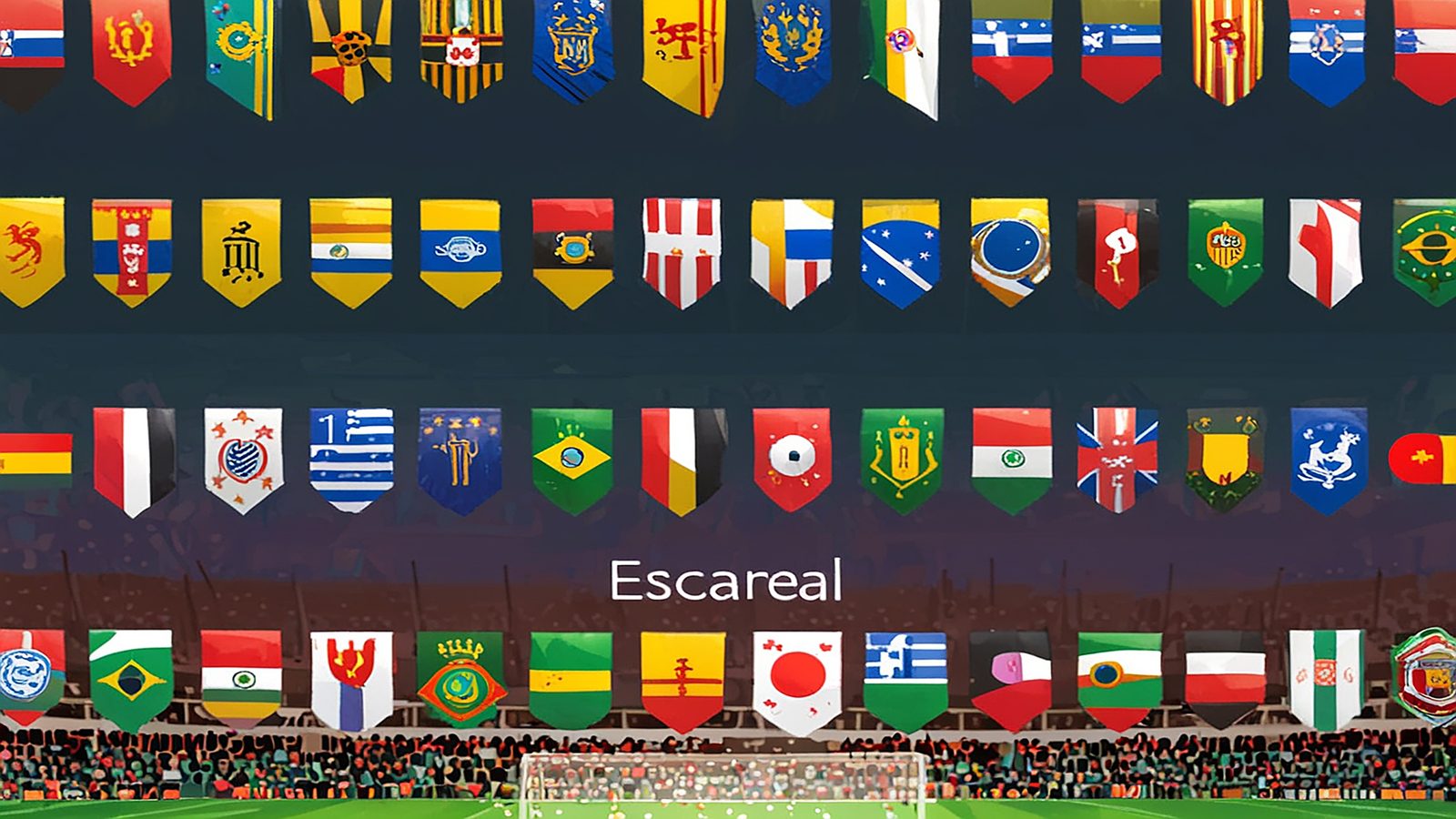
National team selection is one of the features that sets Goaler apart from most browser football games and even from many console titles. This page covers why choosing a country matters more than it might seem, how a wide roster changes replay dynamics, and what tournament identity brings to competitive play that club football does not. If you want the practical guide to team selection, see How to Play. For tactical implications of team choice, visit Strategy.
Why National Team Selection Matters Emotionally
Club football loyalty is strong, but it is mediated by transfers, managers, and seasons. Your favourite club’s squad this year is different from last year’s. National team identity is permanent. You do not choose to support your country. You just do. And when you pick that flag in a game, even a browser game with short rounds and WebGL rendering, the stakes feel different.
That emotional weight is what tournament football has always understood. The World Cup matters more than any club competition not because the football is better but because the identity is more personal. Goaler taps into this by making country selection the first meaningful decision in every match. Before you think about timing, positioning, or control input, you choose who you are.
This sounds like a small thing. It is not. Players who pick their own nation consistently play differently from players who pick a neutral or popular country. They take losses harder. They celebrate goals more. They rematch more often after a defeat. The emotional engagement is higher, and in a short format game that depends on replay volume for its competitive loop, that engagement is the difference between a game you play once and a game you return to.
Tournament Identity and Country Choice
Tournament football has a rhythm that club football does not. Groups, knockouts, penalties, and the sudden finality of elimination create a narrative arc that club leagues, with their 38 game gradual resolution, rarely match. Goaler inherits some of that energy through the national team framework, even though the match structure is simpler than a full tournament bracket.
When you select a country, you are implicitly placing yourself in a tournament context. You are not managing a season. You are playing a knockout round where the result is immediate and final. That framing changes how matches feel and how losses register. A 1-0 defeat in a league campaign is disappointing. A 1-0 defeat as your own country in a knockout match is genuinely frustrating.
The wide roster, which third party descriptions from the ModDB listing around the 2014 World Cup referenced as including more than 220 nation teams, amplifies this effect. When a roster only includes 32 or 48 teams, many players cannot find their own country. Goaler’s breadth means a player from Iceland or Senegal or Costa Rica can find and represent their team, which is a rare experience in football gaming and one that drives engagement in ways that limited rosters cannot.
How a Wide Team Roster Changes Replay Value
Most football games restrict their international rosters to teams that have qualified for recent major tournaments or that hold specific licences. This limits the roster to somewhere between 30 and 80 teams, depending on the title. Goaler’s historically referenced roster of more than 220 nations operates on a completely different scale.
The practical effect is that players can explore. You might start by playing as your own country, then try regional rivals, then experiment with teams from confederations you rarely watch. Each selection changes the emotional flavour of the match without changing the mechanical rules. The game is the same, but the context is different, and context is what keeps short format games interesting across dozens of sessions.
A wide roster also creates social dynamics that narrower selections miss. When you beat someone playing as Brazil while you are playing as Luxembourg, the story of that match is more interesting than if both players were using top ranked teams. The underdog narrative is built into the selection system, and players naturally create those narratives for themselves as they explore different countries.
Writing About Teams Without Inventing Licensing Details
One thing worth acknowledging directly: Goaler’s national team selection should not be confused with officially licensed team data from football governing bodies. The game uses national teams as a selection and identity framework, but the specific relationship between the game and any licensing body is not something that can be stated with certainty based on the available historical references.
What we can say is that third party descriptions consistently referenced national team selection as a core feature, that the roster was unusually wide, and that the gameplay was structured around representing a country in competitive matches. Beyond that, it would be inaccurate to claim specific licensing agreements or to invent details about team data that are not supported by visible evidence.
This careful framing matters because football licensing is a complex area where claims can create false expectations. The site treats team selection as a gameplay and identity feature rather than a licensing showcase, because that is what the evidence supports and what matters most to the actual match experience.
The Emotional Stakes of Country Choice
There is a reason international football produces more memorable moments per match than most club football. When a small nation scores a late winner in a World Cup qualifier, it becomes national news. When a club team does the same in a league match, it is sports news. The scale of emotional investment is different because the identity layer is different.
Goaler’s team selection system borrows this effect. Playing as your own country, even in a browser game with short rounds, activates something that playing as a generic team does not. This is well documented in sports psychology research. The International Society of Sport Psychology has published extensively on how national identification affects competitive behaviour and emotional response in sporting contexts.
The practical takeaway for Goaler players is straightforward: if you want the most meaningful competitive experience, play as a team you care about. The mechanical outcome will be the same, but the emotional journey will be richer, and that emotional engagement is what makes short format games worth replaying.
For related reading on why this dynamic works across different game contexts, see the guide on why national team selection still feels special.